
Blind signatures are a signature scheme that provides anonymity by allowing one party to sign a transaction without learning the details of the transaction.
Blind signatures were first introduced by David Chaum in 1982 for an early digital currency system known as eCash, in which they enabled a trusted party to issue and redeem coins without knowledge of who spent those coins.
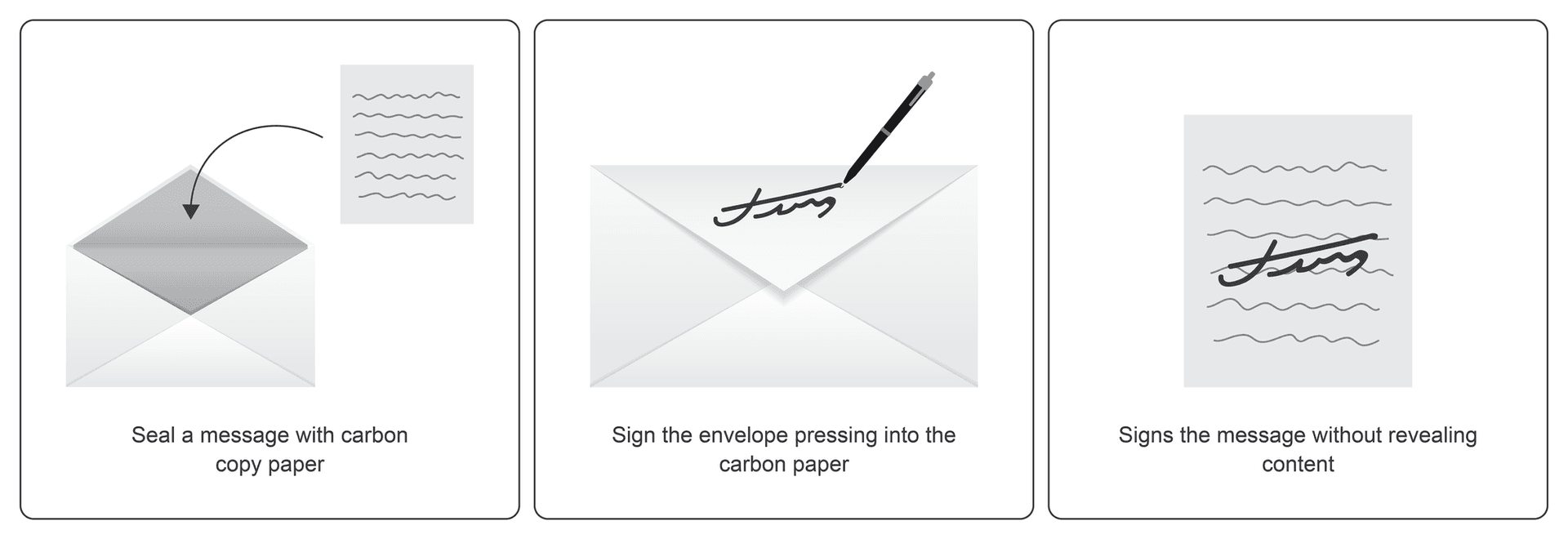
Blind signatures are not part of Bitcoin's base layer, where the signers of an ordinary M-of-N multisignature transaction always see the transaction they are signing. They are used in various Bitcoin layer-2 solutions, such as when minting and redeeming notes in Fedimint. A related but distinct technique, Liquid's Confidential Transactions, hides amounts using Pedersen commitments and rangeproofs rather than blind signatures.
Blind signatures have applications beyond just Bitcoin too. For instance, they are commonly employed in electronic voting systems for transparent public vote tallying without compromising voter privacy.
Read the original whitepaper by David Chaum here.