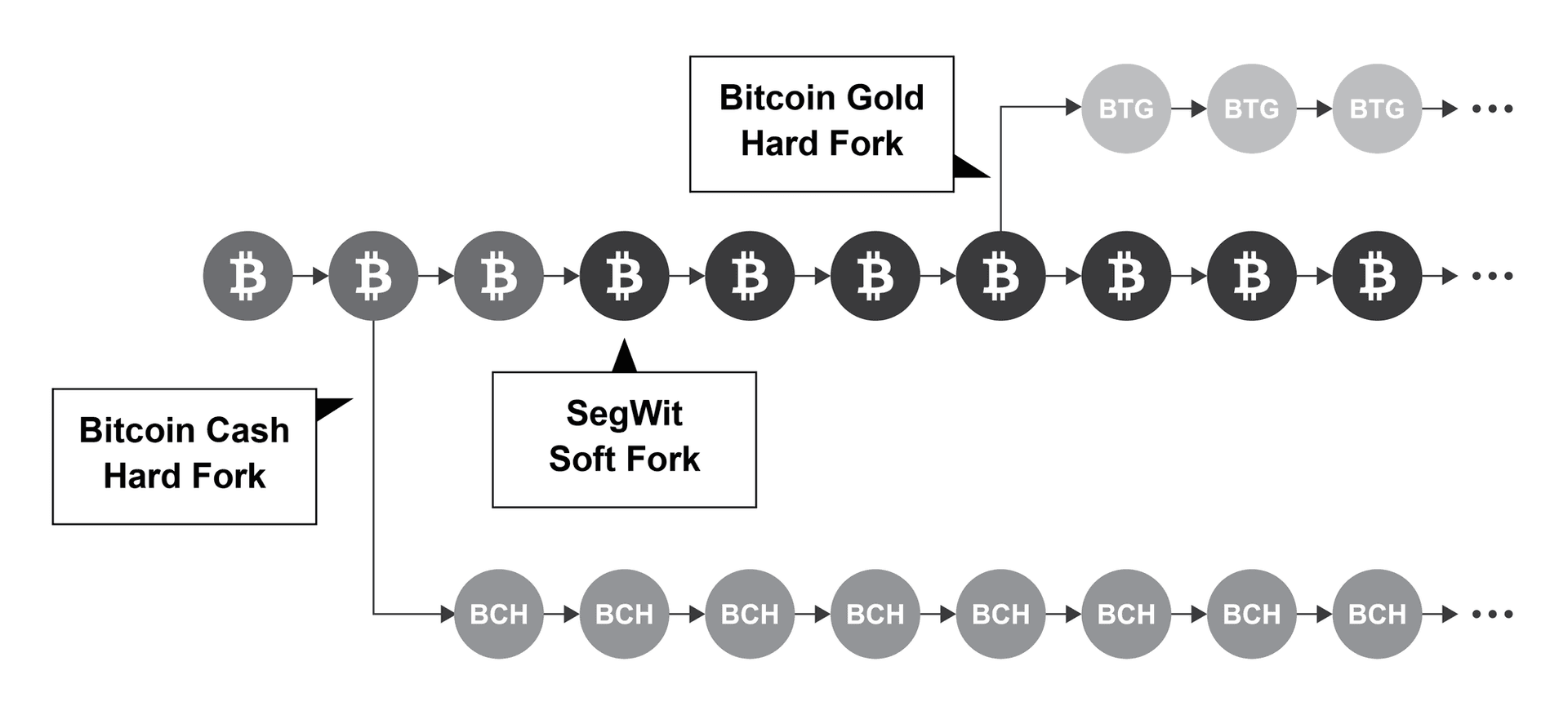
A fork in Bitcoin refers to a change in the protocol rules. There are two main types:
Hard fork: A change incompatible with previous versions, causing the blockchain to split into two if not all nodes upgrade. It results in two chains that share the same history up to the point of the split.
Soft fork: A backward-compatible change, meaning the new chain is still compatible with the old one. Older nodes see new transactions as valid (but may not understand them), ensuring a single continued chain. It tightens or adds rules without ostracizing previous nodes.
Two prominent soft forks in Bitcoin were Segregated Witness (SegWit) in 2017 and Taproot in 2021.